“We took the treatment money for the cruise. You can handle Victor when you get back. We’re sick of taking care of him.”
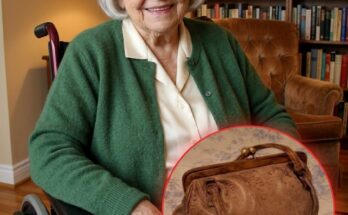
That was the note my mother had left on the kitchen counter.
I had just arrived home in Norfolk after nine months away.
As a Navy flight surgeon, I’d spent almost that entire stretch rotating between intense shifts, emergency transfers, and a long medical support mission at sea. For months, I had dreamed of returning home, embracing my family, and above all, seeing Victor—my stepfather, the man who had raised me as his own daughter since I was eight years old.
Instead, I unlocked the door to a freezing, silent house.
“Victor?”
No answer.
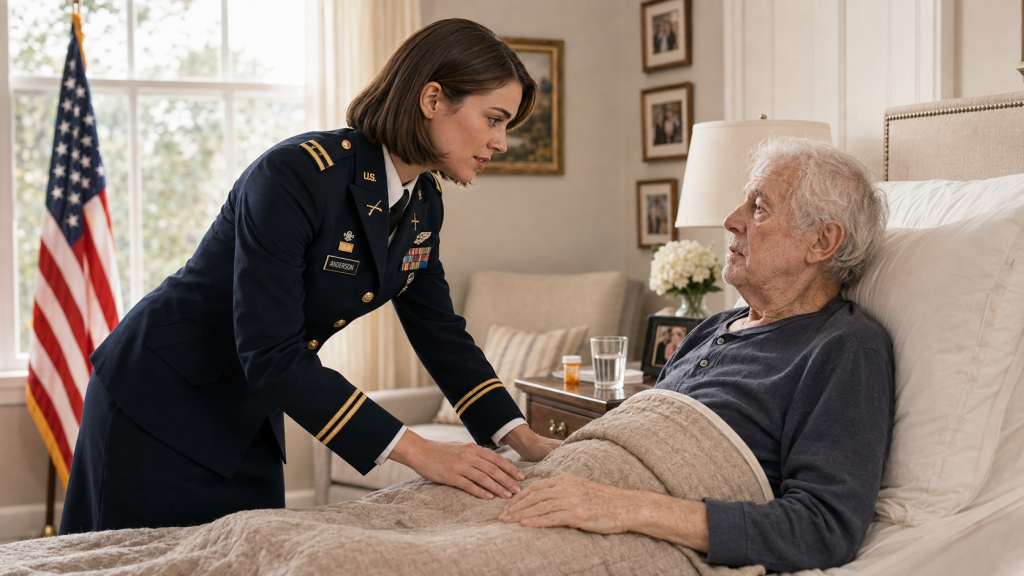
I dropped my duffel bag and ran down the hallway to his bedroom.
I found him lying on his side, shivering violently under a threadbare blanket.
His lips were dry.
His skin had that gray, fragile color I had seen too many times in critically ill patients.
His clothes were soiled, the water glass beside his bed was empty, and the medication organizer on the nightstand hadn’t been filled correctly.
Victor had late-stage pancreatic cancer.
He needed help just to sit up.
“Maya…” he rasped when he saw me. “You’re home.”
Something inside me fractured.
I had spent nine months keeping strangers alive.
I had stepped onto helicopters in bad weather, stabilized injured sailors in cramped compartments, and worked until my hands shook from exhaustion.
Yet the man who had raised me was lying neglected in the house I had helped pay for.
I kicked the heat on.
Then I moved automatically.
Small sips of water first.
Clean clothes.
Fresh sheets.
A warm washcloth.
Medication review.
Temperature.
Pulse.
Breathing.
I called Victor’s home-hospice care team and explained exactly what I had found.
The nurse on duty promised to send someone immediately.
While we waited, I heated broth in the kitchen.
That was when I saw the note again.
It sat beside a fruit bowl as casually as if my mother had written a reminder to buy milk.
We took the treatment money for the cruise.
You can handle Victor when you get back.
We’re sick of taking care of him.
I read it three times.
Then I took a photograph.
I didn’t cry.
Not yet.
“Where is Mom?” I asked when I carried the broth into Victor’s room.
He closed his eyes.
“A trip.”
“What kind of trip?”
He gave the faintest, saddest smile.
“You already know.”
I did.
A tablet was charging on the coffee table.
When I picked it up, an Instagram notification appeared.
Mason.
My younger brother was standing on the upper deck of a cruise ship wearing mirrored sunglasses and an expensive linen shirt.
His girlfriend was beside him.
Behind them, blue Caribbean water stretched to the horizon.
His caption read:
Working hard to play harder. Living the life we deserve.
I stared at those words until my vision blurred.
Working hard?
Mason hadn’t kept a steady job for more than four months in years.
Then another post appeared.
My sister Chloe posing in front of a designer boutique.
Three shopping bags hung from one wrist.
Mom had commented beneath the photograph.
My beautiful girl deserves everything.
I nearly laughed.
Instead, I opened my phone.
The joint family account required two-factor authentication, but I was still an authorized holder because I had contributed to it every month.
The login screen loaded.
I entered my password.
Available balance:
$14.12.
For several seconds, I genuinely believed there had been an error.
The emergency account had contained more than forty thousand dollars the last time I checked.
Part of that money came from me.
Part came from Victor’s pension.
The rest had been built gradually over years for medical expenses, property taxes, and emergencies.
Victor’s cancer diagnosis had made the account more important than ever.
I opened the transaction history.
Cruise line tickets.
Luxury cabin upgrade.
Casino charges.
High-end designer boutiques.
Spa packages.
Premium dining.
Jewelry.
A beach excursion.
More casino charges.
Another jewelry store.
Then I found something that made my stomach twist harder.
A charge for Victor’s prescription refill had been declined three days earlier.
Declined.
While my family drank champagne on a cruise ship.
I stood in the kitchen gripping the counter until my fingers hurt.
The hospice nurse arrived twenty minutes later.
Her name was Janice.
She was in her fifties, direct and kind, the kind of nurse who could walk into chaos and immediately make the room feel manageable.
One look at Victor and her expression changed.
“When was someone last here with him?”
“I don’t know.”
Victor tried to answer.
Janice gently stopped him.
“You save your strength.”
She checked his medications.
Then she looked at me.
“Several doses are missing.”
“I noticed.”
“He shouldn’t have been left alone like this.”
“I know.”
Her voice lowered.
“Do you know who was supposed to be caring for him?”
I looked toward the kitchen.
“My mother. My brother. My sister.”
Janice’s face became very still.
“And where are they?”
“On a cruise.”
For a moment she said nothing.
Then she took out her documentation folder.
“I’m going to make a note of everything I observed today.”
“Please do.”
She studied me.
“You understand why?”
“Yes.”
As a physician, I knew exactly why.
This was no longer just family selfishness.
It was neglect.
Potentially financial exploitation.
Potentially more.
Janice helped me stabilize Victor and arranged for additional hospice support for the next several days.
After she left, I made coffee.
Then I started documenting.
Every transaction.
Every declined medical charge.
Every message.
Every photo posted publicly by my family.
I printed everything.
I didn’t call Mom.
I didn’t message Mason.
I didn’t confront Chloe.
Anger wanted noise.
Training wanted evidence.
So I chose evidence.
By midnight, the dining table looked like an investigation board.
Bank statements.
Cruise receipts.
Screenshots.
Medication records.
Hospice notes.
The photograph of Mom’s handwritten message.
Victor sat in his recliner nearby, wrapped in a fresh blanket.
He looked exhausted.
But he was watching me.
“Don’t call them,” he whispered.
I turned.
“Why?”
“Not yet.”
I pulled a chair beside him.
“Victor, they stole your treatment money.”
“I know.”
“They left you without heat.”
“I know.”
“You could have died.”
“I know that too.”
His calmness disturbed me more than anger would have.
“Then why don’t you want me to call them?”
Victor slowly lifted his left hand.
He still wore the gold signet ring he had owned for as long as I could remember.
As a child, I used to twist that ring around his finger while he read bedtime stories to me.
He removed it.
His hands trembled badly.
Then he placed the ring in my palm.
“Because,” he said, “they think that account was the only money I had.”
I stared at him.
Inside the ring band was a tiny engraved number.
I had never noticed it.
“What is this?”
“The study.”
Victor took a breath.
“Locked drawer. Bottom right.”
I immediately stood.
Victor’s study hadn’t changed much since childhood.
Bookshelves.
A heavy wooden desk.
Old photographs.
Model airplanes.
A framed newspaper clipping from the year he started his first logistics company.
I crouched beside the desk.
The bottom drawer had a small keypad lock.
Click.
The drawer opened.
Inside was a thick envelope from a law firm.
Several property deeds.
Investment statements.
A sealed letter.
And a binder stamped:
HALSTEAD FAMILY TRUST.
I carried everything into the living room.
“What is this?”
Victor watched me carefully.
“My life before your mother knew me.”
I sat down.
For years, I had known Victor had once owned a successful shipping and logistics business.
I knew he had sold most of it before marrying Mom.
What I didn’t know was how successful he had actually been.
The trust documents showed assets I had never imagined.
Commercial property.
Investment portfolios.
Two rental buildings.
Shares in a regional logistics company.
A substantial life insurance policy.
A beach property in North Carolina.
And several accounts holding more money than my mother, Mason, and Chloe had probably ever dreamed existed.
I looked at Victor.
“You never told anyone?”
“I told Evelyn I had enough to live comfortably.”
“That’s not the same thing.”
“No.”
“Why hide it?”
Victor gave a tired smile.
“Because money changes how people look at you.”
That sentence stayed with me.
“When I met your mother,” he continued, “I had already watched relatives fight over money after my father died. I decided I would never let wealth become the center of my family.”
I looked down at the documents.
“So you created the trust?”
“Years ago.”
“Who controls it?”
“Currently?”
He looked at me.
“You.”
I stared at him.
“What?”
“Not yet fully. But you’re successor trustee.”
I shook my head.
“Victor…”
“I updated it after my diagnosis.”
“Why me?”
“Because you never asked me what I was worth.”
My throat tightened.
He continued.
“Mason did.”
I said nothing.
“Chloe did too.”
“And Mom?”
Victor looked toward the darkened kitchen.
“Your mother asked more subtly.”
I sank back into the chair.
Suddenly pieces of my childhood shifted into place.
The vacations Mom constantly wanted.
The renovations.
The comments about what Victor “should” spend.
Mason’s failed businesses that Victor was expected to finance.
Chloe’s expensive degree changes.
My mother always framed everything as family.
Family helps family.
Family shares.
Family doesn’t keep score.
Except apparently family could also empty a cancer patient’s emergency account and leave him freezing.
“What happens when you die?” I asked quietly.
Victor didn’t flinch.
Cancer had already forced him to make peace with questions the rest of us avoided.
“The trust distributes according to my instructions.”
“Which are?”
He pointed to the binder.
I read.
A substantial medical scholarship fund in Victor’s name.
Charitable gifts.
The Norfolk house placed into a protective trust.
Specific investments preserved.
A reasonable inheritance for each of us.
Then I reached the amendment.
The most recent one.
Signed six weeks earlier.
It included a clause addressing financial abuse, coercion, abandonment, and misuse of funds by beneficiaries.
I looked up.
“Victor…”
“I had concerns.”
“You knew this could happen?”
“I hoped it wouldn’t.”
“Why didn’t you tell me?”
“You were deployed.”
“So?”
“You had enough people depending on you.”
I stood abruptly.
“You are one of the people who depends on me.”
Victor’s expression softened.
“I know.”
“No. I don’t think you do.”
My voice broke.
For the first time that night, tears came.
“I spent months helping people I didn’t know while you were here with them.”
He reached toward me.
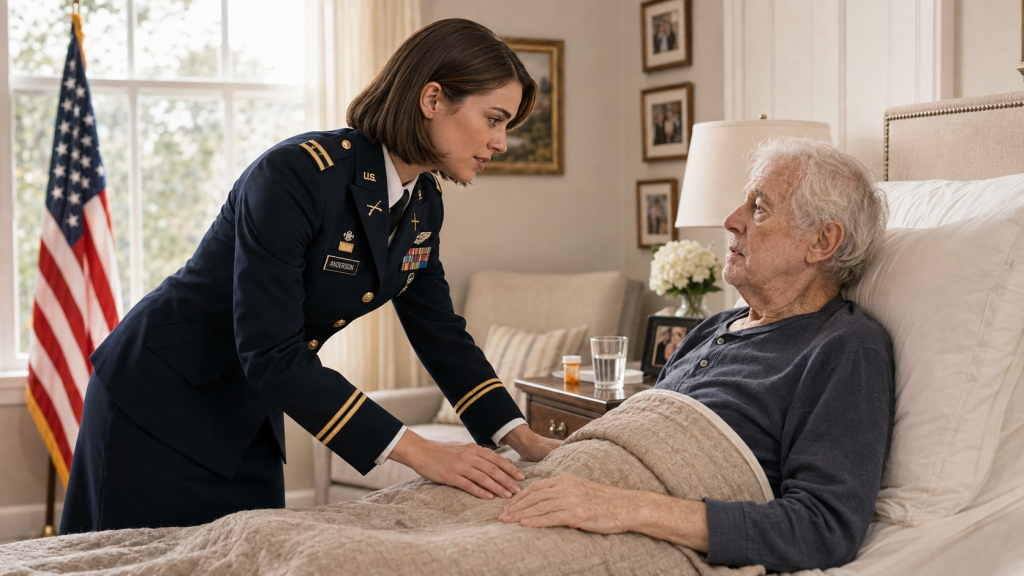
I knelt beside the chair.
“You should have called.”
“I was ashamed.”
“Of what?”
“Needing help.”
I gripped his hand.
“Needing help isn’t shameful.”
His eyes filled.
“I know that now.”
The next morning, I called the attorney listed on the trust documents.
Margaret Levin.
She asked me to bring identification and the original binder.
Two hours later, I sat in her downtown Norfolk office.
Margaret was a sharp woman in her early sixties with silver hair and a habit of listening without interrupting.
After I explained everything, she folded her hands.
“Has Victor been deemed mentally incapacitated?”
“No.”
“Do you believe he understands his finances and decisions?”
“Completely.”
“Good.”
She looked at the bank statements.
“These withdrawals are concerning.”
“They weren’t authorized by him.”
“Are you certain?”
“Yes.”
She studied the note from my mother.
Then she exhaled.
“That helps.”
“With what?”
“Showing intent.”
I already knew that.
Still, hearing an attorney say it made the situation feel different.
Margaret reviewed Victor’s trust amendment with me.
“Maya, your stepfather anticipated the possibility of exploitation.”
“He anticipated this exact situation?”
“Not exactly. But enough.”
“What does the clause do?”
“If a beneficiary is found to have financially exploited, neglected, coerced, or intentionally endangered Victor, their distribution may be reduced or redirected.”
“To where?”
“Primarily the medical scholarship foundation.”
I almost smiled.
Victor had designed consequences without cruelty.
He wouldn’t simply punish them.
He would turn their greed into something useful.
Margaret leaned forward.
“Do not threaten anyone with this trust.”
“I wasn’t planning to.”
“Good. Let behavior speak for itself.”
That became my strategy.
By the third day, Victor was stronger.
Hospice care was stabilized.
I refilled prescriptions using my own card.
I bought groceries.
I repaired the thermostat.
Then I transferred exactly enough money into the joint account to cover Victor’s immediate needs.
Nothing else.
The cruise continued.
So did the posts.
Chloe uploaded photos from a jewelry boutique.
Mason posted himself playing blackjack.
Mom posted a sunset dinner.
Family time is everything, her caption said.
I saved every one.
On the fifth night, Mom finally called.
Not to check on Victor.
To ask about money.
“Maya? Honey, thank goodness. The family card isn’t working.”
I sat beside Victor.
He could hear every word.
“What card?”
“The Visa linked to the emergency account.”
“I know which one.”
“There must be some fraud alert.”
“There isn’t.”
Silence.
“What do you mean?”
“I mean the account balance is too low.”
Mom laughed nervously.
“That can’t be right.”
“It is.”
“Well, transfer something.”
“No.”
The silence afterward was enormous.
“What?”
“I said no.”
“Maya, we’re overseas.”
“You’re in the Caribbean.”
“You know what I mean.”
“You have return tickets.”
“We still have three days left.”
“Then enjoy the ship.”
Her voice hardened.
“You contribute to that account for family.”
“I contributed for emergencies.”
“This is an emergency.”
“No, Mom. Victor’s prescription getting declined was an emergency.”
She said nothing.
I continued.
“The heat being off while he was alone was an emergency.”
“Maya—”
“His dehydration was an emergency.”
“You’re being dramatic.”
Victor looked at me.
I felt my body go cold.
“Dramatic?”
“He was fine when we left.”
That was the first lie.
I wrote it down.
“We had neighbors checking on him.”
Second lie.
I wrote that too.
“He told us he wanted privacy.”
Third.
Victor slowly shook his head.
Mom continued.
“You know how stubborn he gets.”
“I’m hanging up now.”
“Maya, do not embarrass this family.”
I ended the call.
Two minutes later, Mason called.
Then Chloe.
I ignored both.
By midnight I had fourteen missed calls and thirty-one messages.
Most were demands.
Some were insults.
Mason accused me of “playing military dictator.”
Chloe told me I was jealous because I had “no life outside work.”
Mom said I had no right to control family money.
Not one of them asked how Victor was feeling.
I printed those messages too.
Their cruise ended three days later.
I knew their flight landed at 4:40 p.m.
At 6:15, an SUV pulled into the driveway.
I had already prepared the dining room.
Every document was arranged neatly across the table.
The note.
Bank statements.
Medical receipts.
Screenshots.
Hospice records.
A copy of Victor’s medication schedule.
I did not place the trust documents there.
Not yet.
Mom entered first.
She wore a white resort hat, gold sandals, and the expression of someone prepared to be offended.
Mason followed carrying duty-free bags.
Chloe dragged a rose-gold suitcase behind her.
All three stopped when they saw me.
Mom set down her purse.
“So you really decided to stage an intervention.”
“No.”
I gestured toward the table.
“I decided to organize facts.”
Mason laughed.
“You’ve always loved making everything dramatic.”
I looked at him.
“Sit down.”
Something in my voice made him stop smiling.
Chloe crossed her arms.
“I’m exhausted.”
“So is Victor.”
Mom’s face tightened.
“Where is he?”
“In the living room.”
She stepped toward him.
I blocked her path.
“Table first.”
“Maya.”
“Table.”
Victor had asked me to lead the conversation because he didn’t have the strength for conflict.
So I did.
I pointed to the first statement.
“Forty-two thousand, six hundred and eleven dollars.”
Mom looked away.
“That was the balance before you left.”
Nobody spoke.
“Cruise tickets. $8,400.”
Mason shrugged.
“It was for all of us.”
“Victor wasn’t there.”
He said nothing.
“Cabin upgrades. $3,200.”
Chloe rolled her eyes.
“There was a promotion.”
“Casino withdrawals. $6,700.”
Mason sat back.
“So?”
“So the money was meant for medical care.”
“Victor has Medicare.”
I almost couldn’t believe him.
“He has cancer.”
“And insurance.”
“There were prescriptions insurance didn’t fully cover.”
Chloe muttered, “You make plenty.”
I looked at her.
“What did you say?”
“You’re a doctor. You can replace the money.”
There it was.
The entire family philosophy summarized in one sentence.
You can replace it.
Mom leaned forward.
“Maya, nobody is saying this was handled perfectly.”
“You wrote a note saying you were sick of caring for him.”
She paled.
“I was frustrated.”
“You left him without sufficient medication.”
“That wasn’t intentional.”
“You took his money.”
“It was family money.”
“No.”
Victor’s voice came from the living room.
All of us turned.
He stood in the doorway with a cane.
Janice was beside him.
He looked weak, but his eyes were clear.
“It was mine.”
Mom immediately changed.
“Victor.”
She rushed toward him.
He lifted one hand.
“No.”
She stopped.
“I can explain.”
“I’m sure you can.”
“Everything got out of control.”
“You booked a cruise.”
“Because we were exhausted.”
Victor nodded.
“I understand exhaustion.”
Mom blinked.
“I’ve been tired for months too.”
For once, she had nothing to say.
Victor slowly moved to the table.
I pulled out a chair.
He sat.
Then he looked at Mason.
“Did you use my medical fund at the casino?”
Mason shifted.
“It wasn’t like that.”
“Yes or no?”
“It was just a few withdrawals.”
“Yes or no?”
Mason looked down.
“Yes.”
Victor turned to Chloe.
“Did you buy jewelry?”
She crossed her arms.
“It was my birthday.”
“Your birthday was four months ago.”
Her cheeks reddened.
Victor looked at Mom.
“Did you know?”
She hesitated.
“Yes.”
That word changed the room.
Victor nodded.
“Thank you.”
Mom frowned.
“For what?”
“For finally being honest.”
She immediately began crying.
Not quietly.
Not genuinely, in my opinion.
The crying Mom used when she needed everyone to stop focusing on what she had done and start comforting her instead.
“I gave you twenty years of my life.”
Victor looked at her.
“And I gave you mine.”
“I took care of you!”
“For a while.”
“You have no idea how hard it was.”
“I do.”
His voice remained calm.
“That is why I hired home care.”
Mom froze.
“What?”
I turned to her.
“What home care?”
Victor looked at me.
“I arranged for a caregiver three afternoons each week.”
I stared.
“There wasn’t one.”
“I know.”
Margaret had discovered that earlier that day.
The agency had been canceled two months before.
Mom had canceled it.
But the money Victor transferred for caregiving had still been withdrawn.
I added those statements to the table.
Mom’s face drained.
“Maya…”
“Where did the caregiver money go?”
Nobody answered.
Victor closed his eyes.
That hurt him more than the cruise.
I could see it.
He had believed he was paying for support.
Instead, Mom had eliminated the care and kept the funds flowing into the same account.
“I was going to replace it,” she whispered.
“When?” Victor asked.
She had no answer.
Mason stood.
“This is ridiculous. We’re family. Families borrow money.”
Victor looked at him.
“Borrowers ask.”
That shut him up.
Then the doorbell rang.
Mom looked confused.
I wasn’t.
Margaret entered.
She carried a leather briefcase.
Mason laughed.
“You brought a lawyer?”
Victor answered.
“I did.”
Margaret sat at the end of the table.
She introduced herself and explained that she represented Victor.
Mom’s crying stopped immediately.
“What exactly is this?”
“A financial review.”
“Of our family?”
“Of Mr. Halstead’s assets.”
Mason leaned toward Victor.
“Dad, this is insane.”
Victor looked at him.
“You call me Dad when you need money.”
Mason went still.
Victor rarely spoke harshly.
That sentence cut deeper than shouting.
Margaret opened her briefcase.
“There are several matters we need to address.”
She explained the unauthorized withdrawals.
The cancellation of care.
The possibility of financial exploitation.
The obligation to return certain funds.
Mom became defensive.
“Are you threatening to call police?”
Margaret remained expressionless.
“I am explaining options.”
Chloe started crying.
“What are we supposed to do? We don’t have forty thousand dollars.”
“You spent it,” I said.
She glared at me.
“You’re enjoying this.”
“No.”
And I meant it.
There was no joy in any of this.
I would have preferred coming home to a warm house.
Victor sitting in his chair.
Mom cooking dinner.
Mason complaining about football.
Chloe showing me photographs.
Normal family irritation.
Normal family imperfections.
Not this.
Victor placed his hand on the table.
“There is another matter.”
Mom looked at him.
He nodded to Margaret.
She removed the Halstead Family Trust binder.
For the first time, Mom looked truly frightened.
“What is that?”
Victor answered.
“My estate plan.”
Mason gave a nervous laugh.
“You don’t need to worry about that right now.”
“Yes,” Victor said. “I do.”
Margaret explained the trust.
Not the full value.
Just enough.
Victor had assets outside the joint account.
Significant assets.
Mom stared at him as if seeing a stranger.
“How much?”
Victor smiled faintly.
“That is your first question?”
Her face changed.
“I didn’t mean—”
“Yes, you did.”
Mason leaned forward.
“Wait. You had money this whole time?”
Victor looked at him.
“Yes.”
“How much?”
Victor didn’t answer.
Chloe asked, “Are we in the trust?”
Margaret’s eyes shifted briefly toward me.
There it was.
Not how long had he planned it.
Not why had he hidden it.
Not whether he was frightened about dying.
Are we in the trust?
Victor seemed to shrink a little.
But his voice stayed steady.
“You were.”
Mom stared.
“Were?”
Margaret opened the amendment.
Victor had not completely disinherited them.
That wasn’t his style.
Instead, the trust included a conduct clause.
Any beneficiary proven to have financially exploited, abandoned, or endangered him could have their inheritance reduced.
The amount removed would be transferred into the Victor Halstead Medical Scholarship Fund.
Mason laughed nervously.
“You’re kidding.”
“No,” Margaret said.
Chloe’s mouth opened.
Mom whispered, “Victor, you wouldn’t.”
He looked at her.
“You left me freezing.”
She started crying again.
“You were never supposed to be alone that long.”
“That makes it worse.”
“I thought the neighbor would check.”
“No neighbor had a key.”
Silence.
“You knew that.”
Mom covered her face.
Victor continued.
“I lay in that bedroom wondering whether anyone would come back before Maya arrived.”
I looked down.
His voice became thinner.
“I heard the furnace stop. I couldn’t reach the thermostat. My water ran out.”
Mom whispered his name.
He shook his head.
“No. You need to hear this.”
She lowered her hands.
“For most of my life, I believed money revealed character.”
Nobody moved.
“I was wrong.”
He looked at each of us.
“Power reveals character. Money only gives power more options.”
Then he turned toward me.
“Maya had power too.”
I felt everyone’s eyes move toward me.
“She had access to the trust.”
Mom’s head snapped up.
“What?”
“She could have moved money.”
Victor continued.
“She could have hidden assets. She could have emptied accounts. She could have punished all of you before you ever came home.”
Mason looked at me.
Victor smiled faintly.
“She did none of those things.”
I swallowed.
“She bought my medicine.”
He looked at me.
“She cleaned me.”
My throat tightened.
“She called my nurses.”
His voice trembled.
“She sat beside my bed when I was afraid.”
Mom stared at the table.
“That is why Maya is my successor trustee.”
The room exploded.
Mason stood.
“What?”
Chloe yelled, “Are you serious?”
Mom looked at me with open fury.
“You knew?”
“For three days.”
“You hid this from us?”
I almost laughed at the absurdity.
“You left him to die and you’re angry I didn’t tell you about the trust?”
“I did not leave him to die!”
Victor looked at her.
“Stop saying that.”
Mom froze.
“You may not have wanted me dead,” he said. “But you decided your vacation mattered more than whether I was safe.”
No one could argue with that.
Margaret explained that the trust review would take several weeks.
Each disputed transaction would be examined.
No one would receive an inheritance distribution automatically.
Victor would remain in control as long as he was mentally capable.
Mom stared at him.
“And our marriage?”
That question finally sounded human.
Victor looked tired.
“I haven’t decided.”
For the first time, her face truly broke.
Not over money.
Not entirely.
There was fear there.
She realized she might actually lose him before death ever took him.
The meeting ended quietly.
Margaret left.
Mason and Chloe packed overnight bags.
Mom stood in the hallway for several minutes.
Then she approached Victor.
“Can I stay?”
He looked at her.
“Why?”
Her face crumpled.
“Because I’m your wife.”
Victor nodded slowly.
“You were my wife when you boarded the ship.”
She flinched.
“I know.”
“No. I don’t think you do.”
She began crying.
Victor watched her for a long time.
Finally he said, “Guest room.”
Mom stared.
“You can stay in the guest room.”
She nodded.
It wasn’t forgiveness.
It was mercy.
There’s a difference.
The next several weeks changed everything.
Victor’s health continued to decline.
But his dignity returned.
I extended my leave.
My commanding officer helped me arrange additional time after I explained the family medical emergency.
Janice coordinated hospice.
A home health aide came daily.
Meals arrived.
Victor’s pain was better controlled.
And for the first time in months, he wasn’t alone.
Mom stayed.
At first, I assumed it was because of the trust.
Maybe part of her motivation was.
But something shifted.
She stopped wearing jewelry.
Stopped checking social media.
She learned Victor’s medication schedule.
She sat beside him through the nights.
One evening, I found her asleep in a chair beside his bed with her hand resting near his.
I didn’t wake her.
Mason visited only twice.
The first time, he apologized.
But the apology quickly turned into excuses.
“I got carried away.”
“Everyone was spending.”
“I figured Mom had permission.”
Victor listened.
Then asked one question.
“Would you have done it if you believed there was no inheritance?”
Mason didn’t answer.
That was his answer.
Chloe came more often.
She was angry at first.
Then ashamed.
She returned the jewelry.
It wasn’t enough to replace the money.
But it mattered to Victor.
One afternoon, she sat beside him crying.
“I didn’t think about what the money was for.”
Victor said, “That was the problem.”
She nodded.
“I know.”
“You thought about what you wanted.”
“Yes.”
“Learn from that.”
She squeezed his hand.
“I’m trying.”
The trust review finished a month later.
Mason had spent the most.
Victor reduced his inheritance substantially.
A large portion was redirected into the scholarship fund.
Chloe’s inheritance was reduced too, but less severely after she repaid what she could and accepted responsibility.
Mom’s share was placed into a tightly controlled lifetime trust.
She would have housing and basic support.
But she would never again control Victor’s primary assets.
When Margaret explained the final structure, Mom didn’t argue.
She simply nodded.
“I understand.”
Victor asked her to stay afterward.
I left them alone.
An hour later, Mom found me in the kitchen.
Her eyes were swollen.
“He’s filing for legal separation.”
I didn’t know what to say.
“He says I can still stay and help care for him.”
“That’s generous.”
She looked at me.
“I don’t deserve that.”
It was the first time I heard my mother say those words.
I studied her.
“No.”
Her face tightened.
I continued.
“But maybe what you do next matters more than what you deserve.”
She nodded slowly.
That became the beginning of something different between us.
Not reconciliation.
Not yet.
Responsibility.
Mom cared for Victor every day after that.
Not perfectly.
But genuinely.
She apologized without excuses.
Some days Victor accepted the apology.
Some days he didn’t want to talk.
She respected both.
Mason became angry about the inheritance reduction.
He sent me messages accusing me of manipulating Victor.
Margaret handled them.
Then Mason threatened legal action.
That lasted until his own attorney reviewed the documentation.
The note.
The transactions.
The hospice records.
The caregiver cancellation.
He never filed.
Chloe started volunteering twice a month at a cancer support organization.
At first, I suspected it was performative.
Then she kept going even after Victor told her it wouldn’t change the trust.
That’s when I believed her.
Victor lived another four months.
Longer than expected.
Shorter than I wanted.
We spent those months talking about everything.
My childhood.
His first business.
The day he met Mom.
The night he decided to marry her.
The first time I called him Dad by accident and then pretended I hadn’t.
He remembered.
Of course he remembered.
One rainy evening, I sat beside his bed while he turned the signet ring between his fingers.
“You should keep it,” he said.
“It’s yours.”
“Not for long.”
“Victor.”
“I’m not afraid.”
I looked away.
“I am.”
“I know.”
He placed the ring in my palm again.
“When you were twelve, you told me you wanted to be a doctor because doctors could stop people from dying.”
I smiled through tears.
“I was twelve.”
“You were furious when I told you they couldn’t.”
“I remember.”
“You didn’t speak to me for two days.”
“I was dramatic.”
“You were determined.”
He closed my fingers around the ring.
“You cannot stop every ending, Maya.”
I started crying.
“But you can change what happens before it.”
Those were the words I remembered later.
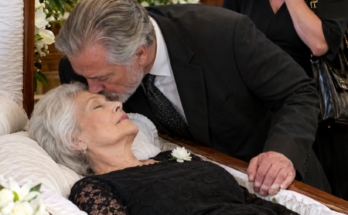
Victor died early one morning in October.
Mom was on his left side.
I was on his right.
Chloe had fallen asleep on the couch.
Victor’s breathing became slower.
Then softer.
Then stopped.
There was no dramatic final sentence.
No sudden revelation.
Just quiet.
I checked his pulse even though I already knew.
Then I rested my forehead against his hand.
Mom whispered, “Is he gone?”
I nodded.
She broke.
I held her while she cried.
Not because I had forgotten what she did.
Not because everything was forgiven.
Because grief does not erase accountability, and accountability does not erase grief.
Two weeks later, we held Victor’s memorial.
The church was full.
Former employees came.
Neighbors.
Friends.
Business partners.
Hospice nurses.
People I had never met told me stories about Victor.
How he paid an employee’s mortgage during a medical crisis.
How he helped a warehouse worker finish college.
How he anonymously funded school supplies.
I kept thinking about the trust.
He had hidden wealth from us.
But he hadn’t hidden generosity from the world.
After the service, Margaret asked me to visit her office.
The scholarship foundation was ready to launch.
Victor had left instructions for the first awards.
Five scholarships.
For students entering medicine, nursing, hospice care, or public health.
Preference would be given to applicants who had cared for seriously ill family members.
I stared at the criteria.
“That sounds like him.”
Margaret smiled.
“There is one more thing.”
She handed me an envelope.
My name was written across the front in Victor’s handwriting.
I opened it.
Inside was a letter.
Maya,
If you are reading this, then I finally lost an argument with cancer.
I laughed through tears.
The letter continued.
You are probably thinking about whether you did enough.
You did.
More than enough.
Do not turn my last months into another mission you need to evaluate.
I needed a daughter.
You were one.
I needed someone to protect my dignity.
You did.
I needed someone who understood that love sometimes means helping and sometimes means saying no.
You learned that before the rest of us.
There was one final paragraph.
Use the trust carefully.
Money can rescue people, but it can also prevent them from ever learning to rescue themselves.
Help when help creates strength.
Step away when help creates dependence.
And never confuse love with financing someone’s refusal to grow.
I read that sentence three times.
Then I folded the letter.
Victor had understood our family better than any of us.
Over the following year, everything changed.
Mom sold most of the luxury items she had purchased over the years.
She used part of the proceeds to repay Victor’s estate.
Nobody required her to.
She did it anyway.
She moved into a smaller townhouse.
She volunteered with the hospice organization that had cared for Victor.
Sometimes I wondered whether she was trying to punish herself.
Eventually, I asked.
She shook her head.
“No.”
“Then why?”
She looked toward a photograph of Victor on her shelf.
“Because I spent years thinking care was something I was owed credit for.”
Her voice broke.
“I want to learn how to give it without keeping score.”
That was probably the closest thing to redemption I would ever hear from her.
Chloe changed too.
She finished her degree.
Got a job.
Started paying back some of the money she had spent, even though Victor’s estate did not require it.
Mason took longer.
For almost a year, he blamed me.
Then he hit bottom.
His girlfriend left.
His credit cards were maxed.
The friends who loved yacht photos and casino weekends disappeared quickly when there was no money left.
One evening, he called.
I almost didn’t answer.
“Maya?”
“Yes.”
His voice sounded different.
Smaller.
“I need help.”
I closed my eyes.
Victor’s letter flashed through my mind.
Help when help creates strength.
Step away when help creates dependence.
“What kind of help?”
“I need money.”
I nearly smiled.
“No.”
Silence.
Then anger.
“Of course.”
“But I can help you make a plan.”
Another silence.
“What?”
“I can help you find work. Build a budget. Negotiate the debt. I can pay for a financial counselor directly.”
“I said I need money.”
“And I said no.”
He cursed.
I remained quiet.
Then he hung up.
Three weeks later, he called again.
“Is the financial counselor offer still there?”
“Yes.”
That was the first step.
Not a miracle.
Not a complete transformation.
Just a step.
Over time, he took more.
He got a warehouse operations job through no connection of mine.
That mattered.
He worked nights.
He hated it.
Then he got promoted.
Two years after Victor died, Mason came with me to the scholarship ceremony.
He stood at the back of the room.
The first recipient that year was a twenty-year-old nursing student named Elena whose father had died from liver cancer.
She had spent her senior year of high school helping care for him while working part-time.
When her name was announced, she cried.
Her mother cried.
I cried too.
Afterward, Mason stood beside me.
“How much is the scholarship?”
“Full tuition for two years.”
He nodded.
“That’s where my inheritance went?”
“Part of it.”
He watched Elena hugging her mother.
For a long time, he said nothing.
Then he whispered, “Good.”
I looked at him.
He meant it.
That was when I knew Victor’s final lesson had reached him.
The signet ring still sits on my desk.
I don’t wear it often.
But before difficult decisions, I turn it over and look at those engraved numbers.
Once, they were just a code to a locked drawer.
Now they remind me of the night everything in my family was exposed.
Greed.
Neglect.
Entitlement.
But also mercy.
Change.
Boundaries.
And the strange fact that love sometimes survives the truth only after the truth destroys the version of the family everyone had been pretending was real.
People sometimes ask whether I regret not confronting my family immediately.
I don’t.
If I had called them screaming from the kitchen, they would have denied everything.
Deleted messages.
Rewritten explanations.
Blamed one another.
Instead, I placed the truth on a table and let it speak.
The transactions spoke.
The note spoke.
The empty medicine bottles spoke.
Victor spoke.
And later, the choices everyone made after being exposed spoke louder than anything else.
My mother chose accountability.
Chloe chose change.
Mason eventually chose responsibility.
And Victor chose what his legacy would mean.
Not revenge.
Not wealth.
Opportunity.
The Halstead Medical Scholarship Fund has now helped dozens of students.
Nurses.
Doctors.
Hospice workers.
Paramedics.
People who understand what it means to stay beside someone when care becomes difficult.
Every year, I give a short speech at the scholarship dinner.
I never tell the whole story.
I don’t mention the cruise.
I don’t mention the casino.
I don’t mention the fourteen dollars and twelve cents.
I simply tell the students one thing Victor taught me.
The value of your life is not measured by how much you accumulate.
It is measured by what becomes possible for other people because you were here.
Then I look down at the gold ring on my finger.
And for just a second, I can almost hear Victor laughing.
Not the weak laugh from his final months.
The old laugh.
The one from childhood.
The one that filled our kitchen whenever I tried to convince him I could survive entirely on cereal and peanut butter.
The sound reminds me that he was more than a cancer patient.
More than a trust.
More than the victim of what my family did.
He was my father in every way that mattered.
And although I came home believing I needed to save him, the truth is that Victor saved something in all of us before he left.
He forced my mother to see what entitlement had turned her into.
He forced Chloe to understand that wanting something did not make her deserving of it.
He forced Mason to face a life without easy money.
And he taught me that protecting people does not always mean shielding them from consequences.
Sometimes protection is medicine.
Sometimes it is warmth.
Sometimes it is holding someone’s hand at three in the morning.
And sometimes it is simply saying no.
The morning after one scholarship ceremony, I drove past the old Norfolk house.
We had eventually sold it.
A young family lived there now.
There were bicycles near the porch.
A dog was sleeping by the front window.
Someone had planted yellow flowers along the walkway.
I parked across the street for several minutes.
For years, I had remembered that house as cold.
The empty water glass.
The blanket.
The note.
The thermostat.
But sitting there, watching children race across the lawn, I realized the worst memory no longer owned the place.
Victor had loved that house once.
We had Christmas mornings there.
Birthdays.
Homework arguments.
Burned dinners.
Movie nights.
Ordinary life.
That mattered too.
I touched the ring.
Then I whispered, “I’m okay.”
Maybe I was telling Victor.
Maybe I was telling myself.
Before driving away, I looked at the house one last time.
Then my phone buzzed.
It was a photograph from Mom.
She was standing beside Chloe and Mason at a hospice charity event.
Mason looked uncomfortable in the volunteer shirt.
Chloe was laughing.
Mom held a small handwritten sign.
For Victor.
I stared at the picture.
There was no perfect ending.
We never became the family we had been before.
Thank God.
That family had been built on avoiding hard truths.
The family we became afterward was smaller.
Messier.
More cautious.
But real.
We had boundaries now.
We apologized.
We paid our own bills.
We stopped calling manipulation love.
Most importantly, we learned that forgiveness did not mean pretending nothing happened.
It meant refusing to let the worst thing that happened become the only thing that defined us.
I put the phone down.
Started the car.
And drove toward the hospital.
I had patients waiting.
A life waiting.
And somewhere, because Victor had planned carefully even while dying, another young student was opening an envelope telling them that their dream of becoming a nurse or doctor was now possible.
That was the inheritance Victor cared about most.
Not houses.
Not investment accounts.
Not the trust.
What continued after him.
And in the end, that became the part of his story none of us could spend.
 THE END! THANK YOU FOR READING!