Some bonds are forged in classrooms. Some are built on playgrounds. But the strongest bonds? They’re often created in moments when life and death stand face to face. This is the story of two soldiers who once stood shoulder to shoulder in uniform—and later stood side by side on a stage, not with weapons, but with music.
They didn’t meet in a music studio. They met in service. Picture early mornings before sunrise, boots laced tight, the air still carrying last night’s cold. Picture endless drills where the rhythm of commands becomes a kind of music in itself. Picture missions where trust wasn’t optional—it was survival. In those conditions, colleagues quickly become something more. They shared tents pitched on dusty ground, mess-hall coffee that never seemed strong enough, and the kind of jokes that only make sense at 3 a.m. between watches. They traded stories about home, worries about the future, and fears they wouldn’t show to anyone else. Those nights—when silence could be louder than any radio—cemented a bond that civilians rarely see.
Over time, the two men became more than teammates. They became brothers. There’s a shorthand that develops when you’ve watched someone at their worst and kept going anyway: a glance that says, “I’ve got you,” a nod that means, “Do what you need to do.” Those small, wordless moments matter. When a convoy rolled out or a tense patrol ended safely, they were the ones slapping each other’s backs, laughing to thin the tension, or sitting in companionable quiet because there simply weren’t words. That kind of closeness doesn’t dissolve when uniforms are folded and tucked away.
When the war ended, civilian life began. The transition was jarring. The structure they’d known for years—the strict schedules, the clear chain of command, the feeling of being part of a purpose-driven unit—vanished almost overnight. Adrenaline quieted into a strange kind of emptiness. They both found themselves missing the clarity of mission, the camaraderie that made every day meaningful. Like many veterans, they carried memories that never fully left: sights, sounds, and small details that would surface at odd moments, bringing with them a rush of old fear or sorrow. It was in that hush of post-service life that music quietly stepped in.
At first, it was harmless. One hummed a tune while washing dishes. Another found himself whistling on a walk. Little by little, songs that had been a backdrop in the barracks—old rock classics, folk tunes, or ballads passed around the mess hall—reappeared. Then one day, almost casually, they sang together. Maybe it was around a campfire at a reunion, or perhaps in a living room with a guitar passed back and forth. Whatever the setting, when their voices met, something unexpected happened: their tones blended in a way that felt honest rather than polished. They weren’t trying to be stars; they were simply telling the truths they’d carried in their chests for years.
Singing together felt a lot like serving together: it required trust, timing, and unity. When one took a lead, the other knew when to harmonize, when to hold back, when to step forward. There were the same instincts honed in service—watching each other closely, anticipating a move, filling in gaps without speaking. Except this time, instead of coordinating to protect lives, they were coordinating to touch hearts. The songs became a bridge between past and present, a place where grief and joy could co-exist in a single line.
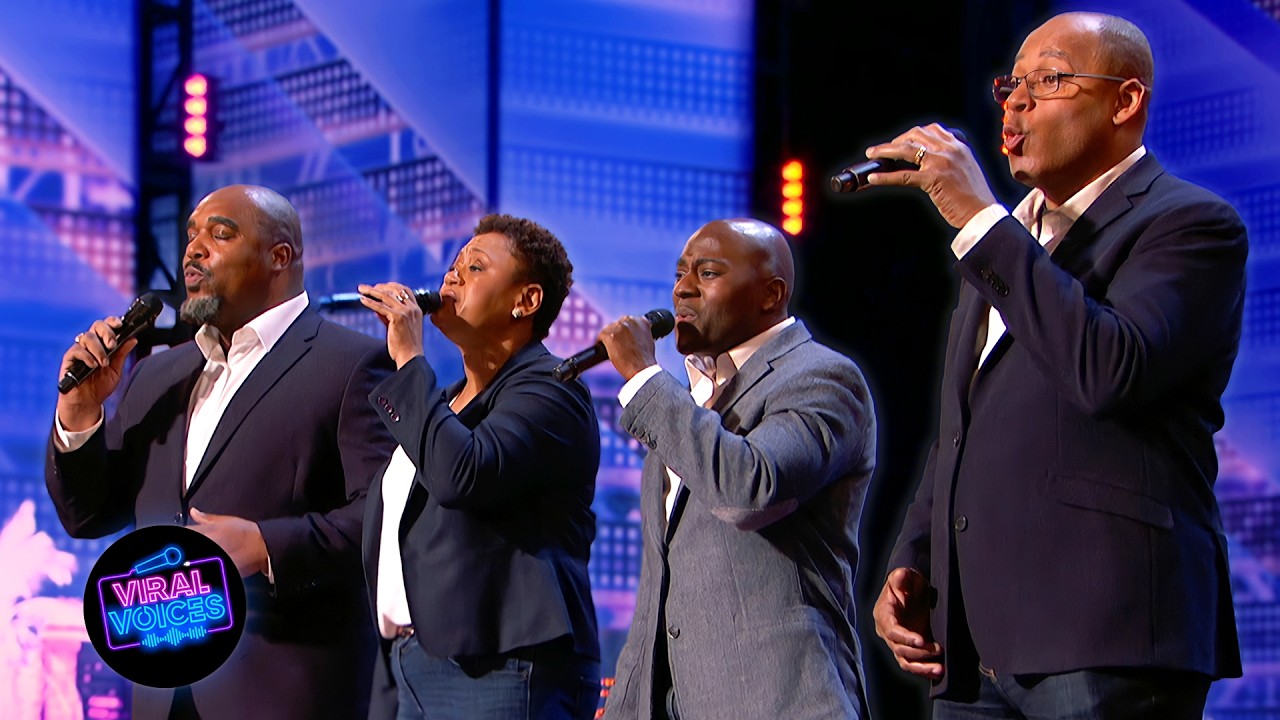
Then came the moment that changed everything. Standing on a stage, lights warming their faces and an expectant hush falling over the crowd, they were no longer soldiers in the uniform sense. They were storytellers. As that first note rang out, the audience leaned in. It wasn’t a flawless performance by technical standards—voices cracked on raw syllables, breath caught on emotional lines—but it was real. You could see their eyes glisten, feel the intake of air across the auditorium when a harmonized passage hit just right. People around them wiped away tears, some held their breath, others closed their eyes and simply listened. Silence turned into applause, not for technique, but for authenticity.
Why did their song hit so hard? Because they weren’t singing to impress. They were singing to express. Their performance reminded those in the room that heroes struggle too, that healing doesn’t follow a straight line, and that friendship can save you more than once. It highlighted that the power of a melody often lies in the story behind it: the late-night conversations, the shared losses, the laughter that survived through the worst days. It wasn’t about hitting every note perfectly; it was about connection, and that’s why it resonated.
For them, music became more than an activity—it was survival. It offered a safe space to breathe, to place heavy memories into lyrics and watch them transform. By sharing their story publicly, they did something brave: they opened a door for other veterans feeling isolated, offering a quiet invitation that you’re not alone and that healing can be found in unexpected places. They showed a crowd, and a world, that beauty can follow pain, that brotherhood can morph into something gently profound, and that sometimes the most powerful weapons are the songs we choose to sing together.